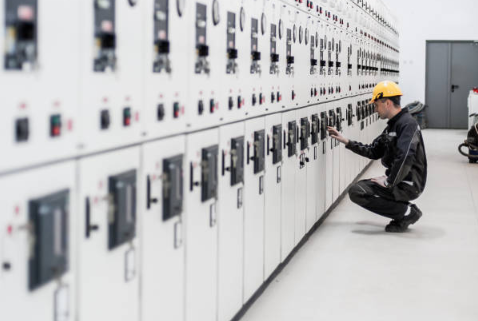
Modern data centers require highly reliable and space-efficient electrical infrastructure to support continuous uptime, scalability, and energy efficiency. As computing density grows and facilities expand vertically and horizontally, conventional switchgear solutions often struggle to meet spatial, safety, and performance demands.
This is where gas insulated switch gear becomes an essential component of medium voltage power distribution architecture. By enclosing live parts within a sealed gas environment, GIS technology enables compact layouts, enhanced protection against environmental factors, and dependable operation under demanding conditions.
These attributes make medium voltage GIS particularly well suited for mission-critical environments such as hyperscale and colocation data centers, where uninterrupted power delivery is fundamental to operational continuity.
Understanding Medium Voltage GIS in Data Center Power Systems
Medium voltage gas insulated switchgear operates typically within the 1 kV to 52 kV range, serving as the backbone between utility supply, onsite generation, and downstream low voltage distribution. In data centers, this layer forms the primary electrical distribution stage that feeds transformers, power distribution units, and redundant supply paths.
Unlike air insulated switchgear, GIS encloses conductors, circuit breakers, and disconnectors inside sealed metal compartments filled with insulating gas. This configuration provides several inherent advantages that directly address data center design constraints:
- High dielectric strength allows reduced phase spacing and compact assemblies
- Sealed enclosures protect components from dust, humidity, and contaminants
- Minimal maintenance due to enclosed architecture
- Enhanced personnel safety through arc-resistant construction
These characteristics enable data center designers to achieve high power density within limited electrical room footprints while maintaining reliability standards such as Tier III and Tier IV availability requirements.
Why Data Centers Prefer Medium Voltage GIS
Space Optimization in High-Density Facilities
Data center operators continuously seek to maximize white space for revenue-generating IT equipment. Electrical infrastructure that occupies less floor area directly increases usable computing space. Medium voltage GIS can reduce switchgear footprint by up to 40 percent compared to equivalent air insulated systems. This compactness is especially beneficial in:
- Urban colocation facilities with constrained real estate
- Multi-story data centers where electrical rooms are stacked
- Edge data centers deployed in modular or prefabricated structures
The ability to install switchgear closer to load centers also reduces cable lengths and associated losses, improving overall distribution efficiency.
Reliability and Uptime Assurance
Unplanned power interruptions are unacceptable in data center environments. Medium voltage GIS improves reliability through sealed insulation that is immune to ambient conditions such as humidity, salt air, or industrial pollution. Since internal components are isolated from external contaminants, failure risks associated with insulation degradation or tracking are significantly reduced.
Furthermore, GIS designs often incorporate:
- Vacuum circuit breakers with high mechanical endurance
- Compartmentalization to prevent fault propagation
- Continuous monitoring of gas pressure and insulation integrity
These features align with the redundancy and fault tolerance strategies used in data center electrical topologies, including dual bus and ring main configurations.
Enhanced Safety in Electrical Rooms
Electrical safety is critical in facilities operating continuously with minimal human intervention. GIS systems are inherently safer than open air insulated assemblies because energized parts are inaccessible and contained within grounded metal enclosures. Arc-resistant GIS further ensures that any internal arc event is contained and directed away from operators.
This containment capability is particularly valuable in data centers where electrical rooms may be adjacent to occupied spaces or IT halls. The reduced arc flash risk also lowers the required personal protective equipment level for maintenance personnel, improving operational safety practices.
See also: Alfie Deyes Net Worth: From Vlogging to Business Ventures
Role of Medium Voltage GIS in Data Center Architecture
Utility Interface and Incoming Supply
At the facility boundary, GIS panels receive medium voltage utility feeders and distribute power into internal buses. GIS enables flexible connection schemes such as double busbar or ring configurations, allowing multiple utility sources to feed the same facility without cross contamination risks.
Because GIS is compact and modular, incoming supply rooms can be positioned close to building entry points or basement levels without large ventilation requirements. This simplifies building integration and structural design.
Integration with Backup Generation Systems
Data centers rely on diesel or gas generators to maintain operation during grid outages. Medium voltage GIS simplifies generator interconnection by providing standardized breaker panels and synchronization compartments within the same switchgear lineup. This integration supports seamless transfer between utility and generator sources.
GIS also allows:
- Generator paralleling at medium voltage level
- Segmented bus sections for redundancy
- Isolation of faulty generator feeders without affecting others
These capabilities are essential for maintaining N+1 or 2N power architectures common in hyperscale facilities.
Feeding Transformers and Downstream Distribution
From GIS switchgear, feeders supply medium voltage to step-down transformers that serve IT loads and mechanical systems. The sealed nature of GIS reduces the risk of upstream faults propagating toward transformers. Additionally, the compact footprint allows switchgear and transformers to be located in proximity, reducing medium voltage cable runs and losses.
In high-rise data centers, GIS enables vertical power distribution shafts where feeders rise through floors in controlled pathways. This vertical integration supports scalable expansion without redesigning core electrical rooms.
Environmental and Operational Advantages
Immunity to Harsh Environmental Conditions
Data centers located in coastal, desert, or industrial regions face environmental challenges such as salt mist, dust, and corrosive atmospheres. Air insulated switchgear in such conditions often requires filtered or conditioned electrical rooms. Medium voltage GIS eliminates most environmental sensitivity because components are sealed.
This environmental resilience enables installation in:
- Underground electrical vaults
- Rooftop enclosures
- Containerized or modular power blocks
- Outdoor prefabricated substations
As a result, data center developers gain flexibility in site layout and building design.
Reduced Maintenance Requirements
Routine maintenance activities such as cleaning insulators, checking clearances, or replacing degraded components are minimal in GIS installations. Sealed compartments preserve insulation quality over decades, reducing scheduled shutdowns and operational disruption.
Maintenance typically involves:
- Periodic gas density verification
- Functional testing of breakers and protection relays
- Thermal imaging of accessible connections
Lower maintenance frequency directly supports data center uptime goals and reduces lifecycle operational cost.
Supporting Scalability and Modular Expansion
Data center growth is often incremental. Operators prefer infrastructure that can expand without major outages or reconstruction. Medium voltage GIS is modular by design, allowing additional panels to be added to existing lineups with minimal disruption.
Scalability advantages include:
- Extendable busbars within GIS enclosures
- Plug-in feeder panels for new transformers
- Modular generator connection sections
- Prefabricated GIS blocks for phased deployment
This modularity aligns with modern data center construction practices where electrical capacity increases alongside IT demand. Facilities can start with lower initial capacity and scale to full design load over time.
Efficiency and Loss Reduction
Power distribution efficiency directly impacts operating cost and sustainability metrics. Medium voltage GIS contributes to efficiency in several ways:
First, shorter conductor spacing and enclosed busbars reduce leakage and corona losses compared to air insulated assemblies. Second, compact layouts allow shorter cable runs between switchgear, transformers, and loads. Third, stable insulation properties maintain low dielectric losses over time.
These factors collectively improve overall electrical system efficiency, supporting data center energy performance targets such as low power usage effectiveness. Efficient distribution also reduces heat generation within electrical rooms, lowering cooling demand and associated energy consumption.
Integration with Monitoring and Smart Grid Technologies
Modern GIS systems incorporate digital sensors and intelligent electronic devices that provide real-time visibility into electrical performance. In data centers, this monitoring capability integrates with building management and energy management platforms to enable predictive maintenance and load optimization.
Typical monitoring parameters include:
- Gas pressure and insulation condition
- Breaker operation counts and timing
- Busbar temperature and load currents
- Partial discharge detection
By analyzing these metrics, operators can identify emerging faults before failure occurs. Predictive maintenance reduces downtime risk and extends equipment life. Integration with smart grid interfaces also allows participation in demand response or energy optimization strategies.
Sustainability Considerations in GIS Deployment
Data centers increasingly prioritize sustainability and environmental responsibility. Medium voltage GIS contributes to sustainability through compactness, longevity, and efficiency. Smaller electrical rooms reduce construction materials and building footprint. Long service life minimizes replacement cycles and waste generation. Improved efficiency lowers energy consumption and emissions.
However, insulating gases traditionally used in GIS have high global warming potential. Manufacturers are actively developing alternative gas mixtures with significantly lower environmental impact. Adoption of eco-efficient GIS technologies supports data center sustainability targets while retaining the benefits of gas insulation.
Lifecycle assessments show that the operational efficiency and reduced material use of GIS often offset environmental impacts associated with gas insulation. Proper handling, leak prevention, and end-of-life gas recovery further mitigate environmental concerns.
Design Considerations for Data Center GIS Installations
Successful integration of medium voltage GIS in data centers requires careful engineering coordination. Key considerations include electrical topology, redundancy level, thermal management, and maintenance access. Electrical engineers must align GIS configuration with facility uptime classification and load distribution strategy.
Important planning aspects involve:
- Busbar configuration for redundancy architecture
- Short-circuit ratings matching utility fault levels
- Accessibility for testing and panel extension
- Integration with protection and control systems
Thermal conditions in electrical rooms must also be assessed, although GIS generates less heat than air insulated alternatives. Adequate ventilation and monitoring ensure stable operating conditions throughout equipment life.
Future Trends in Medium Voltage GIS for Data Centers
As data centers evolve toward higher power densities and distributed architectures, medium voltage GIS continues to advance. Several trends are shaping its role in next-generation facilities.
One trend is the integration of GIS into prefabricated power modules. These modules combine switchgear, transformers, and protection systems in factory-assembled enclosures that can be deployed rapidly onsite. This approach accelerates construction and ensures consistent quality.
Another trend is the adoption of environmentally friendly insulating gases. New formulations maintain insulation performance while dramatically reducing greenhouse impact. Data center operators increasingly specify these eco-efficient solutions to meet sustainability commitments.
Digitalization is also expanding. GIS with embedded sensors and communication interfaces enables condition-based maintenance and remote diagnostics. This capability is essential for edge data centers and unmanned facilities where onsite technical staff may be limited.
Conclusion
Medium voltage GIS has become a cornerstone of reliable and space-efficient power distribution in modern data centers. Its sealed insulation, compact footprint, and high reliability directly address the unique challenges of mission-critical electrical infrastructure. By enabling flexible topologies, supporting modular expansion, and enhancing operational safety, GIS aligns with the uptime and scalability requirements of hyperscale, colocation, and edge facilities.